


There’s a moment in every growing business when retail buying stops making sense. Maybe it’s the third time this month someone’s done a supermarket run for paper towels. Maybe it’s noticing the café next door pays half what you do for the same gloves. Or maybe it’s simply the maths: your consumables bill has doubled with headcount, and nobody is actually managing it.
Bulk buying is the obvious answer but done badly, it just swaps one problem for another: cash tied up in stock, storerooms full of products nobody uses, and cartons of the wrong thing because someone guessed at quantities. Done well, though, switching to wholesale supply for your cleaning supplies perth operation uses every day is one of the highest-return operational changes a growing business can make. This guide covers when to make the switch, what to buy in bulk first, and how to avoid the classic mistakes.
When Does Bulk Buying Start to Make Sense?
There’s no magic revenue number, but there are clear signals:
- You’re reordering the same items more than once a month. Repeat purchasing is the definition of a bulk-suitable product.
- Multiple people are buying ad hoc. Fragmented purchasing means retail prices, no records, and no volume leverage.
- You’ve run out of something critical during trade. Stockouts of gloves, liners or toilet paper mid-service are a sign your buying hasn’t kept pace with your growth.
- You have somewhere to put a carton. Even a single storeroom shelf is enough to start. Bulk doesn’t mean pallets it usually just means cartons instead of single units.
If two or more of those apply, you’re leaving money on the table every week you delay.
What to Move to Bulk First
Not everything belongs in bulk. The best candidates share three traits: you use them constantly, they don’t expire quickly, and the carton-versus-retail price gap is wide.
Tier One: Immediate Wins
Start here — these have the biggest gap between retail and trade pricing:
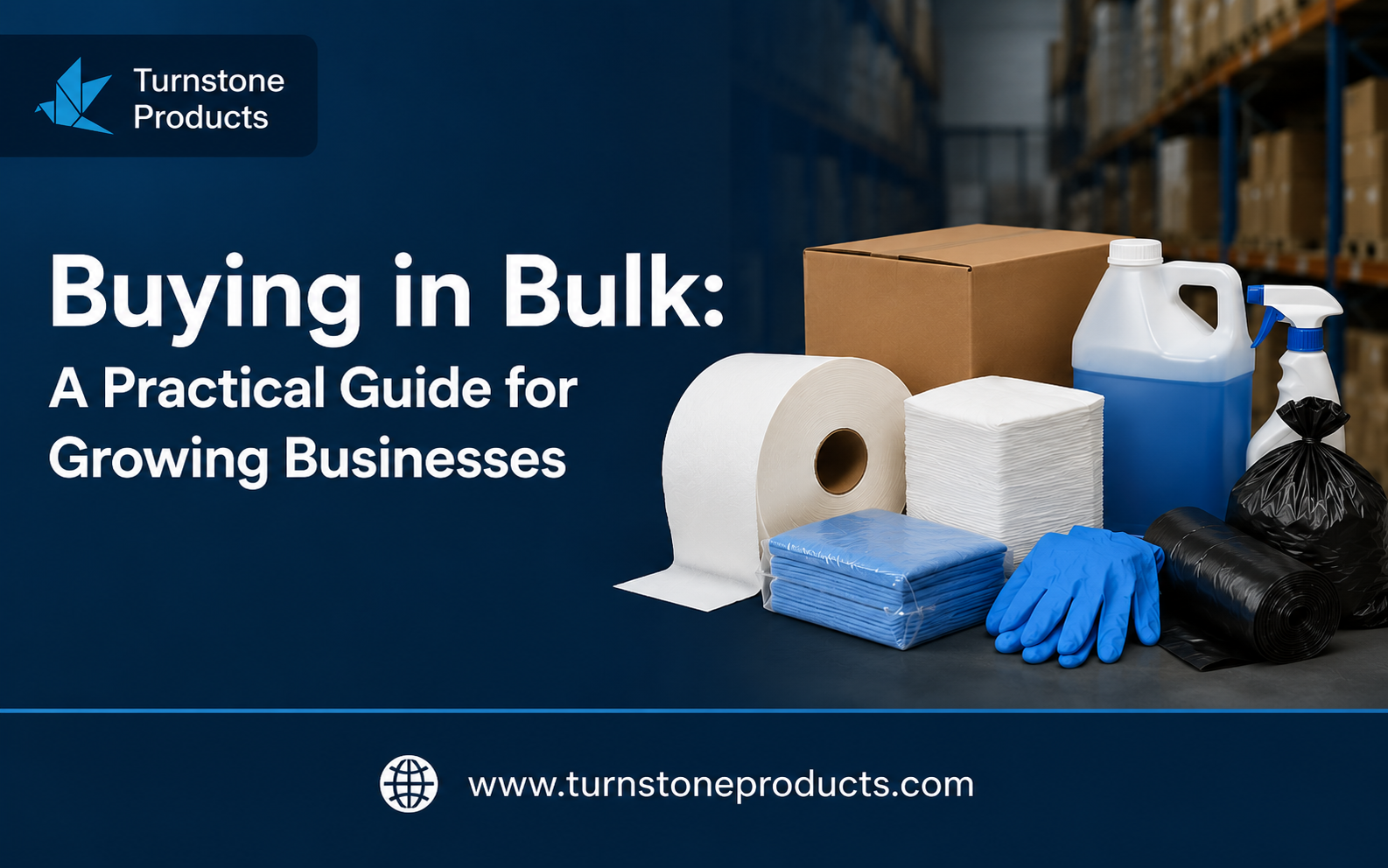
- Paper products — toilet rolls, hand towels, roll towels. Non-perishable, used daily, and dramatically cheaper by the carton.
- Bin liners — bought by the roll at retail, by the carton at trade, with a price-per-liner difference that’s often startling.
- Disposable gloves — food, cleaning or clinical use; carton pricing beats box-by-box buying every time.
- Cleaning chemicals — 5L, 10L and 20L drums instead of retail spray bottles cut per-litre cost enormously, especially with concentrates.
Tier Two: As You Scale
Once the basics are on a bulk cycle, add napkins, cups and catering consumables, soap and sanitiser refills, wipes, and PPE. These follow the same logic but the volumes only justify cartons once your team or customer traffic grows.
What Not to Bulk-Buy
Anything with a shelf life you can’t consume in time, specialty items used a few times a year, and anything you haven’t tried yet. Buy one, test it, then commit to a carton.
Choosing Wholesale Supply Over Retail: What Actually Changes
Moving to a trade supplier changes more than price. When comparing cleaning products perth suppliers at wholesale versus grabbing stock retail, four things shift in your favour.
First, pricing becomes volume-based. Trade suppliers price by the carton and improve pricing as your order grows a growing business gets automatically rewarded for growing.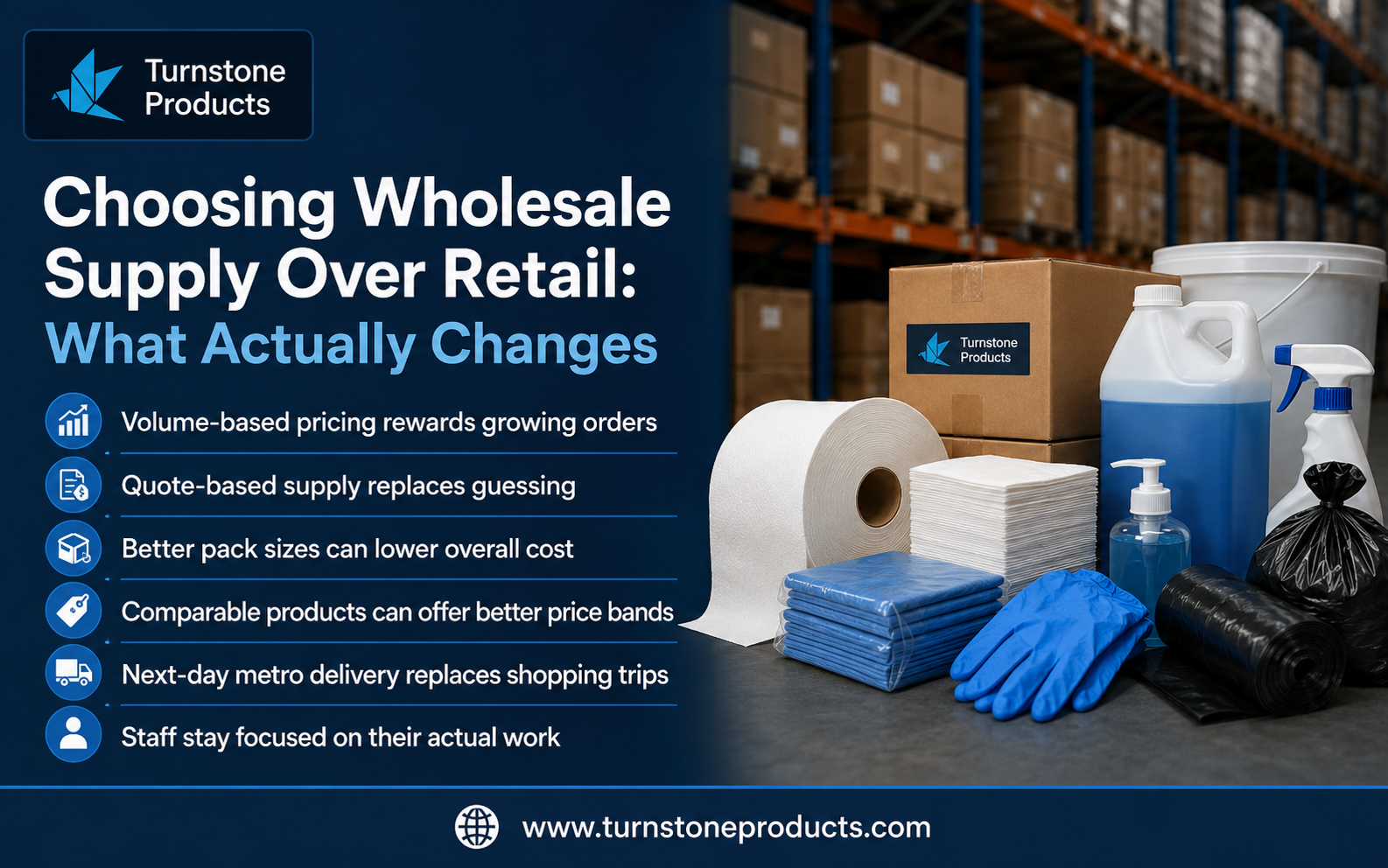
Second, quoting replaces guessing. A quote-based supplier looks at your actual list and usage, then prices the lot. That conversation routinely surfaces savings of a different pack size, a comparable product at a better price band that no retail shelf ever will.
Third, delivery replaces shopping trips. Next-day metro delivery means the person who used to do supply runs does their actual job instead. For a business paying staff $30+ an hour, eliminating even one weekly shopping trip pays for itself instantly.
Fourth, a trade account replaces one-off transactions. Repeat ordering by phone or form, consistent pricing, one invoice trail consumables become an administered system instead of a recurring chore.
The Five Classic Bulk-Buying Mistakes
Growing businesses make the same errors again and again. Avoid these and you’ve avoided most of the pain:
- Buying volume before verifying the product. Always trial before you commit to cartons — a cheap glove that tears constantly is expensive at any price.
- Ignoring storage reality. Order to your shelf space and your usage rate, not to the biggest discount tier.
- Chasing unit price over total cost. A liner that’s two cents cheaper but splits under load doubles your usage. Judge products by cost-per-job, not cost-per-unit.
- Letting everyone order independently. Nominate one person to own the consumables list. One buyer, one supplier, one order cycle.
- Set-and-forget ordering. Review the standing order quarterly. Businesses change; the order should too.
Building a Simple Reorder System
You don’t need software — you need a rhythm. List every consumable you use. Note how long a carton of each lasts. Set a reorder point (when the last full carton is opened, it goes on the list). Place one consolidated order on a fixed day each fortnight or month. With a supplier offering next-day delivery, your buffer stock can stay small, which keeps cash free the whole point of doing this properly.
Why Choose Turnstone Products
Turnstone Products is a Perth B2B supplier built for exactly this transition. As a wholesale cleaning supplies perth business, Turnstone supplies chemicals in bulk drums, paper products, bin liners, gloves, catering consumables, PPE and washroom supplies by the carton with next-day delivery across the Perth metro. There’s no online checkout; you order by quote form or phone, which means a real conversation about your volumes, pack sizes and pricing before you commit. Growing businesses can set up a trade account and recurring deliveries, so the reorder system in this guide runs itself. It’s wholesale supply designed for businesses stepping up from retail buying without the pallet-quantity minimums.
Final Word
Bulk buying isn’t about hoarding stock, it’s about paying trade prices for things you were always going to buy anyway, and freeing your team from the supply run. Start with paper, liners, gloves and chemicals. Consolidate to one supplier. Trial first, then commit to cartons. Build a simple reorder rhythm. Every one of those steps is small, and together they turn a leaky, retail-priced expense into a managed, wholesale-priced system that scales as you do.