



Providing safe and high-quality support is one of the most important responsibilities of any NDIS provider. While organisations work hard to prevent risks and protect participants, incidents can still occur due to unexpected situations, changes in participant needs, workplace challenges, or environmental factors. Having effective systems in place ensures providers can respond appropriately, protect participant wellbeing, and continuously improve their services.
Incident management is not only about responding after something happens. It involves creating a proactive culture where risks are identified early, concerns are addressed promptly, and lessons from incidents are used to improve service delivery. A strong incident management framework supports transparency, accountability, and participant safety across all areas of an organisation.
For NDIS providers, understanding regulatory expectations and implementing structured processes is essential. Staff must know how to recognise incidents, report concerns, document details accurately, and follow appropriate escalation procedures. Without clear systems, organisations may experience compliance challenges, inconsistent responses, and increased risks for participants and employees.
Why Effective Incident Management Matters in NDIS Services
Every NDIS provider has a responsibility to ensure participants receive safe, respectful, and appropriate support. Incident management plays a critical role in protecting participants from harm while ensuring organisations respond professionally when issues occur.
A well-designed system allows providers to identify what happened, understand contributing factors, and implement improvements to prevent similar situations in the future. This approach supports continuous improvement and demonstrates a commitment to quality and safety.
Effective NDIS Incident management also strengthens trust between participants, families, support workers, and service providers. When incidents are handled transparently and respectfully, participants feel confident that their concerns are taken seriously and that appropriate action will be taken.
Providers must ensure employees understand their responsibilities and have access to clear procedures. Regular education and practical guidance help staff respond confidently and maintain consistent standards across the organisation.
Key Elements of an Effective Incident Management System
A strong incident management framework should include the following elements:
- Clear Reporting Procedures
- Staff should understand how and when to report incidents, including what information needs to be documented.
- Risk Identification and Assessment
Organisations should assess the seriousness of incidents and determine appropriate response actions.
- Timely Investigation
Incidents should be reviewed carefully to understand causes, contributing factors, and possible improvements.
- Accurate Documentation
Detailed records help demonstrate compliance and support future decision-making.
- Participant Communication and Support
Participants should be informed appropriately and supported throughout the incident response process.
- Corrective Actions and Continuous Improvement
Organisations should use incident outcomes to strengthen policies, procedures, and service delivery practices.
By implementing these elements, providers can create a safer environment and improve the overall quality of support provided to participants.
Understanding the Incident Management Process
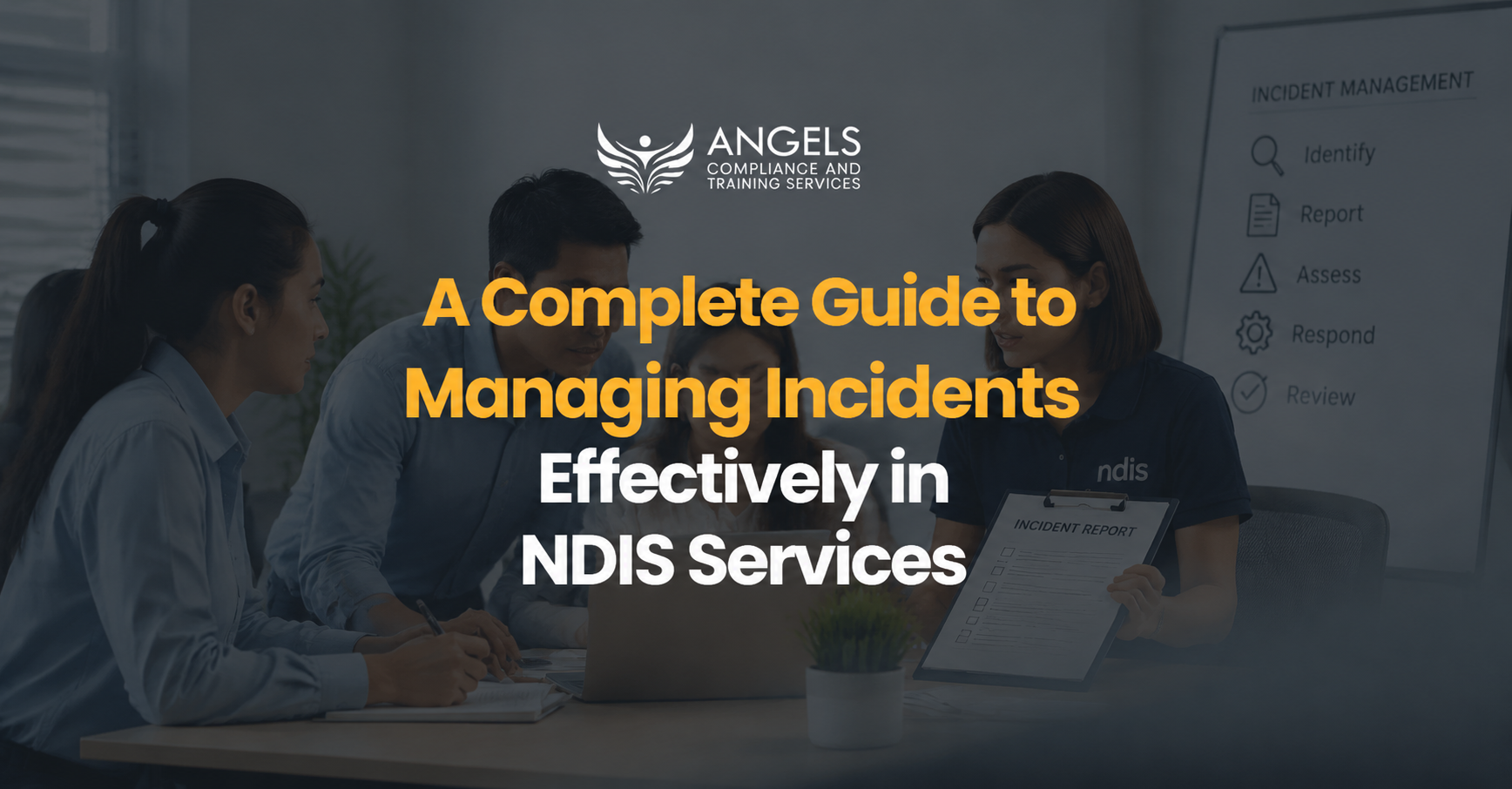
An effective NDIS Incident management process provides a structured approach for identifying, responding to, and reviewing incidents within an organisation. The process ensures that incidents are not only addressed immediately but also analysed to prevent future occurrences.
The first stage involves recognising and reporting the incident. Staff must be able to identify what qualifies as an incident and understand the correct reporting channels. This may include participant injuries, allegations of abuse or neglect, medication errors, unsafe situations, or breaches of participant rights.
After reporting, the incident should be assessed to determine the level of risk and the appropriate response required. Serious incidents may require immediate action, additional reporting obligations, or notification to relevant authorities.
The investigation stage focuses on understanding what occurred and identifying contributing factors. Rather than focusing only on individual mistakes, effective investigations examine systems, processes, training, and environmental factors that may have influenced the situation.
Finally, organisations should review outcomes and implement improvements. This may involve updating procedures, providing additional staff training, or making operational changes to reduce future risks.
How Angels Compliance and Training Supports NDIS Providers
Angels Compliance and Training helps NDIS providers strengthen their compliance systems and improve their approach to incident management. Their experienced team supports organisations in developing practical frameworks that align with regulatory expectations and promote participant safety.
Managing incidents effectively requires more than having documents available. Staff need to understand their responsibilities and know how to respond appropriately in real situations. Angels Compliance and Training provides guidance to help organisations develop stronger processes, improve staff knowledge, and prepare for compliance requirements.
For organisations looking to improve their internal capabilities, ndis incident management training provides valuable education on identifying incidents, completing documentation correctly, managing risks, and following appropriate reporting procedures. Training ensures employees have the confidence and knowledge required to respond effectively when incidents occur.
Angels Compliance and Training assists providers through tailored training programs, compliance assessments, documentation reviews, and operational guidance. Their approach focuses on practical implementation rather than simply meeting minimum requirements.
By working with compliance specialists, providers can strengthen their systems, improve staff competency, and create a workplace culture focused on safety, accountability, and continuous improvement.
Benefits of Professional Incident Management Support
Engaging professional support for incident management provides several advantages:
- Improved Staff Confidence
Employees gain better understanding of their responsibilities and how to respond during incidents.
- Enhanced Participant Safety
Strong systems help identify risks early and support appropriate responses.
- Better Compliance Preparation
Providers can demonstrate that their processes align with NDIS expectations.
- Consistent Reporting Practices
Clear guidance ensures incidents are recorded accurately and managed effectively.
- Continuous Improvement Opportunities
Incident reviews help organisations identify areas where services can be strengthened.
- Reduced Operational Risks
Effective systems minimise the likelihood of repeated issues and improve overall service quality.
Professional guidance allows providers to develop stronger processes while focusing on delivering positive participant outcomes.
Common Challenges in NDIS Incident Management
Many providers face challenges when developing and maintaining effective incident management systems. One common issue is inconsistent reporting practices among staff. When employees have different understandings of what should be reported or how documentation should be completed, important information may be missed.
Another challenge is ensuring that incident responses remain participant-focused. Providers must balance compliance obligations with respect, privacy, and communication that supports the participant’s wellbeing.
Organisations may also struggle with keeping staff knowledge current. As requirements and expectations evolve, ongoing education is necessary to ensure employees remain confident and capable.
Effective training, regular reviews, and professional guidance help providers overcome these challenges and maintain strong safety systems.
Maintaining a Strong Incident Management Culture
A successful incident management approach requires more than policies and procedures. It depends on creating an organisational culture where employees feel comfortable reporting concerns and where incidents are viewed as opportunities for improvement.
Leadership plays an important role in encouraging transparency and accountability. When management prioritises safety and supports open communication, employees are more likely to report incidents early and contribute to improvements.
Regular reviews of incident trends can also provide valuable insights. By analysing patterns, organisations can identify recurring risks and implement strategies to improve service delivery.
Building this culture requires ongoing commitment, staff engagement, and continuous improvement. Providers that prioritise learning and prevention are better positioned to deliver safe and reliable supports.
Conclusion
Effective incident management is essential for maintaining participant safety, meeting compliance expectations, and improving the quality of NDIS services. A structured approach ensures incidents are identified, reported, investigated, and used as opportunities to strengthen organisational practices.
Working with experienced compliance professionals such as Angels Compliance and Training can help providers develop stronger systems, improve staff knowledge, and maintain effective safety practices. By investing in appropriate processes and ongoing staff development, organisations can create a safer environment where participants receive reliable, respectful, and high-quality support.